+86-13819126663
Desumidificadores Para Museus, Arquivos E Bibliotecas video

Desumidificadores Para Museus, Arquivos E Bibliotecas

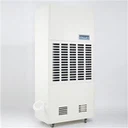
Desumidificador 240L para museus

Descrição

Desumidificadores para Museus, Arquivos


Principais características:

1. aplicação de grande área: grande capacidade de desumidificação, adequado para a demanda de desumidificação de grande área, grande ciclo de vento


2, ultra-ampla faixa de umidade: 20% -90% ultra-ampla faixa de umidade, pode atender às necessidades de diferentes locais de desumidificação, pode responder de forma flexível a ambientes extremos


3, apoiar a drenagem contínua: tubo de drenagem externo, acesso direto ao tubo de esgoto, drenagem conveniente


4, desumidificação inteligente: contém chips inteligentes, desumidificação inteligente automaticamente de acordo com a umidade ambiental atual, não há necessidade de assistir


5, julgamento de falhas inteligentes: determinar automaticamente a localização da falta e feedback na tela LCD para manutenção


6, dois sentidos de tempo: pode definir o tempo de inicialização e tempo de desligamento de acordo com os requisitos de trabalho, fácil de operar


Fotos do produto:

Dehumidifiers for Museums, Archives and Libraries

Dehumidifiers for Museums, Archives and Libraries

Parâmetros detalhados:

Modelo DH-5168C
Remoção de umidade 168 l / d ou 7 l / h
Fonte de energia 380V / 50HZ
Entrada de Potência Nominal 3,2 kW
Corrente de alimentação 6,2A
Temperatura de trabalho 5-38 ℃
Ar circulante 1600M3 / h
Refrigerante R22 / R407C
Peso líquido 108 kg
Peso bruto 118 kg
Aplicando o Espaço 150 ~ 200m2
Dimensão do Produto 405x605x1620mm
Dimensão da embalagem 485x655x1680mm
Carregando Qty 33 pçs / 20ft
Período de produção 10 dias
garantia 1 ano

Pedido de desumidificador em museus, arquivos e biblioteca

O conceito de umidade (umidade absoluta e umidade relativa) geralmente está envolvido no estudo de estudos ambientais em museus. Para entender a umidade, é necessário entender a relação entre umidade relativa e umidade absoluta. O ar ao nosso redor contém uma certa quantidade de vapor de água, que é chamado de ar úmido; o ar teoricamente livre de vapor de água é chamado ar seco. A umidade absoluta é a razão entre a massa de vapor de água no ar e o volume total de ar úmido. É uma medida da quantidade de vapor de água no ar.


Sob certas condições de temperatura, a razão entre o conteúdo de água no ar e o teor de água no qual o vapor de água no ar atinge o ponto de saturação é o que normalmente chamamos de umidade relativa. Quando a umidade do ar atinge o nível mais alto, é chamada de saturação. A umidade relativa nesse caso é de 100%.


A quantidade de água que pode ser armazenada no ar é afetada pela temperatura. Quanto maior a temperatura, mais a água é. Portanto, a umidade absoluta (teor de água) não muda. Quanto maior a temperatura, menor a umidade relativa. Se o peso do vapor de água no ar é constante e a temperatura muda, a umidade relativa pode variar muito.


Por exemplo, para museus em um ambiente semi-aberto, coleções que incluem artefatos de metal podem ser expostas a uma temperatura e umidade relativa mais altas durante a exposição, mas por algum motivo os artefatos são movidos para ambientes de baixa temperatura, devido à mudança de temperatura, o vapor de água em torno dos artefatos de metal irá condensar sob condições frias, causando "condensação". O fenômeno da "condensação" de vapor d'água na superfície de artefatos metálicos é uma importante causa de corrosão de artefatos metálicos.


Além disso, a umidade do ambiente em que a coleção é colocada é muito grande, o que torna as coleções com pouca resistência à água, como papel, a cor das pinturas escurece e é propensa a manchas de mofo; e se a umidade for muito baixa, a madeira e as lacas irão rachar. . Portanto, controlar o teor de umidade e a temperatura da atmosfera no museu é muito importante.


Hoje em dia, muitos museus e galerias de arte em casa e no exterior começaram a usar reguladores de umidade atmosférica, absorvedores de umidade, etc. para ajustar a umidade da sala de exposição e do armazém, e receberam certos resultados.

The concept of humidity (absolute humidity and relative humidity) is usually involved in the study of museum environmental studies. In order to understand the humidity, it is necessary to understand the relationship between relative humidity and absolute humidity. The air around us contains a certain amount of water vapor, which is called wet air; the air that is theoretically free of water vapor is called dry air. Absolute humidity is the ratio of the mass of water vapor in the air to the total volume of humid air. It is a measure of the amount of water vapor in the air.  Under certain conditions of temperature, the ratio of the water content in the air to the water content at which the water vapor in the air reaches the saturation point is what we usually call relative humidity. When the moisture in the air reaches the highest level, it is called saturation. The relative humidity in this case is 100%.  The amount of water that can be stored in the air is affected by the temperature. The higher the temperature, the more the water is. Therefore, the absolute humidity (water content) does not change. The higher the temperature, the lower the relative humidity. If the weight of water vapor in the air is constant and the temperature changes, the relative humidity may vary greatly.  For example, for museums in a semi-open environment, collections including metal artifacts may be exposed to a higher temperature and relative humidity during the exhibition, but for some reason the artifacts are moved to In a low temperature environment, due to the change of temperature, the water vapor around the metal artifacts will condense under cold conditions, causing


The concept of humidity (absolute humidity and relative humidity) is usually involved in the study of museum environmental studies. In order to understand the humidity, it is necessary to understand the relationship between relative humidity and absolute humidity. The air around us contains a certain amount of water vapor, which is called wet air; the air that is theoretically free of water vapor is called dry air. Absolute humidity is the ratio of the mass of water vapor in the air to the total volume of humid air. It is a measure of the amount of water vapor in the air.  Under certain conditions of temperature, the ratio of the water content in the air to the water content at which the water vapor in the air reaches the saturation point is what we usually call relative humidity. When the moisture in the air reaches the highest level, it is called saturation. The relative humidity in this case is 100%.  The amount of water that can be stored in the air is affected by the temperature. The higher the temperature, the more the water is. Therefore, the absolute humidity (water content) does not change. The higher the temperature, the lower the relative humidity. If the weight of water vapor in the air is constant and the temperature changes, the relative humidity may vary greatly.  For example, for museums in a semi-open environment, collections including metal artifacts may be exposed to a higher temperature and relative humidity during the exhibition, but for some reason the artifacts are moved to In a low temperature environment, due to the change of temperature, the water vapor around the metal artifacts will condense under cold conditions, causing

Tag: desumidificadores para museus, arquivos e bibliotecasChina, fabricantes, fornecedores, fábrica, atacado

Enviar inquérito

(0/10)

clearall